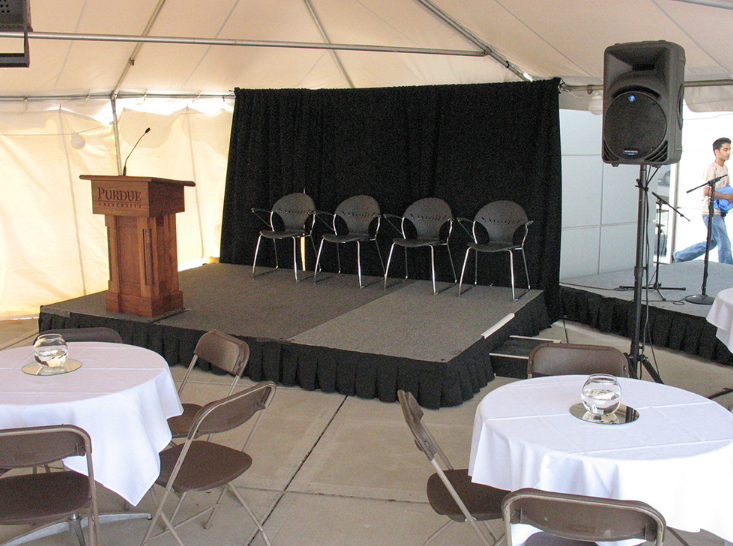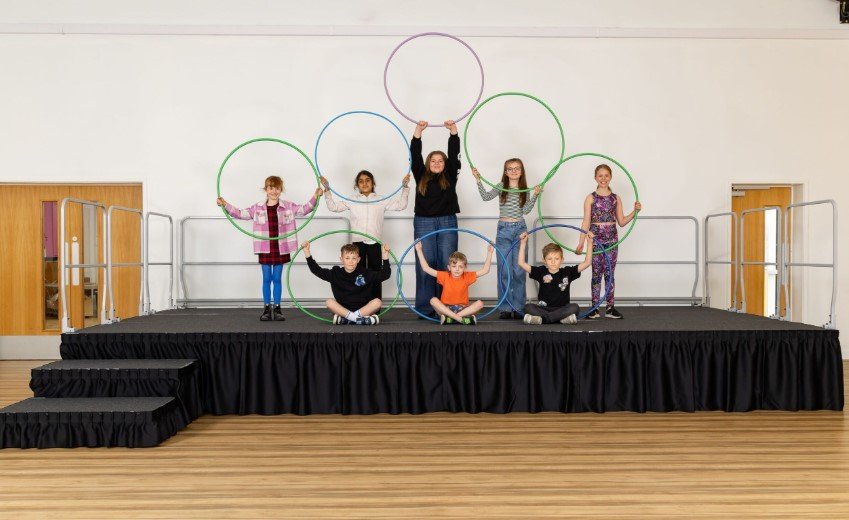
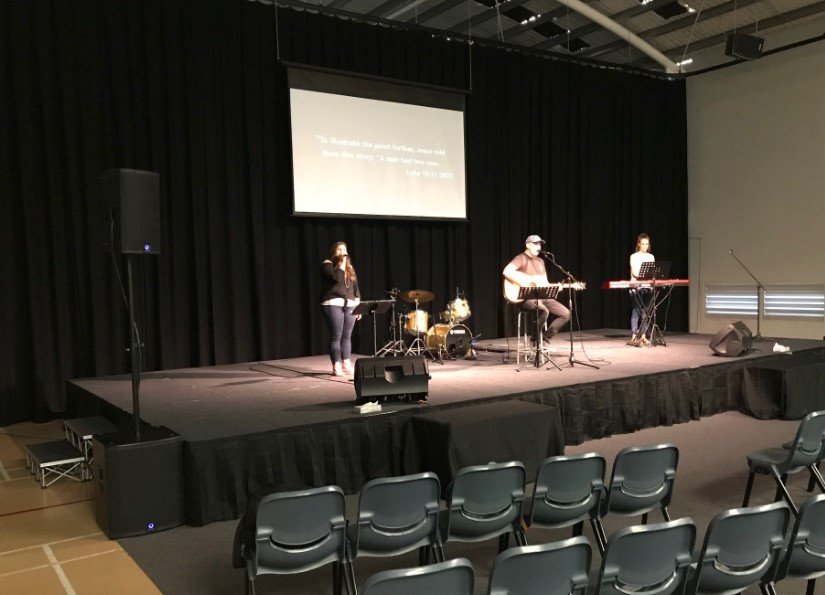
Schools and churches run events all year round. Plays, assemblies, concerts, services, and community gatherings all need a stage. Most halls aren’t built with permanent theatres. A fixed stage takes up space needed for sport or community activities.
The practical solution is a modular platform for stage use.
Across the UK, modular staging systems are becoming the go-to choice. They’re flexible, safe, easy to store, and cost-effective. Here’s why they work so well for schools and churches.
What a modular stage platform is
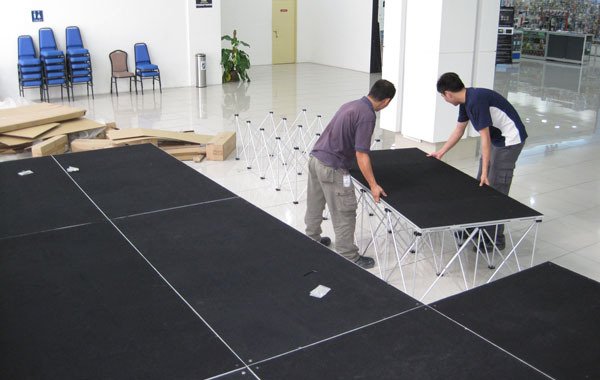
A modular stage system is made of individual units. Each platform is usually 1m x 2m or 1m x 1m. Units lock together to create a stage of any size or shape.
When the event ends, the units stack on trolleys and roll into storage. Assembly and breakdown take less than an hour.
One system can cover dozens of layouts across the year.
Why schools benefit from modular staging
School halls serve many purposes: PE lessons, assemblies, exams, and plays. A permanent stage would waste valuable space. Modular platforms solve the problem.
- Flexible layouts – Build small stages for assemblies or full sets for productions.
- Quick storage – Stack units on trolleys and roll them into cupboards.
- Safe design – Non-slip tops and high load ratings (750–1,000 kg per m²).
- Professional look – Painted or carpeted finishes give parents and audiences a better experience.
Case: Manchester primary school – Spent £6,200 on modular aluminium platforms. Built into a 6m x 4m stage for plays and assemblies. Stored on two trolleys in a cupboard. Used more than 25 times a year, the system replaced £2,000 in annual hire fees. Staff report setup takes less than 40 minutes with four people.
Also Read: Best Acoustic Portable Stage Solutions for UK Events, Schools and Weddings
Why churches benefit from modular staging
Churches also need flexible solutions. Services, weddings, concerts, and community events each demand different setups. Modular platforms adapt easily.
- Choir risers – Stack platforms at multiple levels for visibility and sound projection.
- Worship services – Raise pastors, musicians, or readers for better audience sightlines.
- Community use – Reconfigure for conferences, weddings, or seasonal performances.
- Fast setup – Volunteers can assemble in under an hour.
Case: Bristol church – Invested £4,800 in spider-leg modular platforms. The system creates a 5m x 3m stage for services and doubles as tiered choir risers at Christmas. Stored on trolleys, the units take less than 1.5m depth. The church avoided more than £1,000 per year in hire costs. Members said visibility and acoustics improved immediately.
Standard sizes and specifications
Schools and churches often use standard unit sizes.
- Platform dimensions – 1m x 2m or 1m x 1m blocks.
- Heights – Adjustable legs from 20 cm to 100 cm.
- Load ratings – 750–1,000 kg per m² for choirs, equipment, and props.
- Unit weights – 25–40 kg each, depending on material.
Aluminium frames keep weight down while providing strength.
Safety features to check
Safety is critical where children and community members perform.
- Non-slip surfaces – Reduce fall risk.
- Guardrails – Required for platforms above 60 cm.
- Locking mechanisms – Keep units stable.
- Fire-retardant finishes – Required for carpeted tops.
Ask suppliers for safety certification. Don’t assume every system meets UK standards.
Cost ranges in the UK
Budget depends on size and finish.
- Individual 1m x 2m platforms: £200–£400.
- Full school or church systems: £5,000–£10,000.
- Storage trolleys: £400–£600 each.
Spending more upfront on strong frames and quality finishes extends lifespan. Many systems last 10+ years when stored indoors.
Delivery lead times
UK suppliers usually deliver in:
- 1–2 weeks for stock items.
- 3–4 weeks for carpeted or branded platforms.
- 4–6 weeks for large modular builds.
Schools often leave ordering too late for Christmas plays or summer shows. Order early to avoid disappointment.
Storage and transport
Schools and churches often face tight storage limits. Modular platforms are designed to fit.
- Stack vertically on trolleys.
- Roll into cupboards or storerooms.
- Lightweight aluminium frames make carrying easier.
Without proper storage planning, even the best system becomes impractical.
Questions to ask suppliers
When contacting a supplier, ask:
- What is the load rating per platform?
- Are legs adjustable and lockable?
- Do units connect securely?
- Is the surface non-slip and fire-retardant?
- Are guardrails and trolleys included?
- What warranty is provided?
- What is the delivery lead time?
Suppliers who answer clearly and provide certificates are worth trusting.
Common mistakes to avoid
- Buying too few platforms, leaving cramped stages.
- Forgetting guardrails for taller configurations.
- Storing wooden tops in damp areas.
- Leaving orders too late for seasonal events.
- Overlooking total weight capacity.
Avoiding these mistakes ensures safety and long service life.
FAQs
What Is the Best Modular Platform for Stage Use in Schools and Churches?
The best modular platform for stage use in schools and churches should be flexible, safe, easy to store, and quick to assemble. Many UK venues choose aluminium modular staging systems with non-slip surfaces, adjustable legs, and secure locking mechanisms because they support assemblies, worship services, concerts, drama productions, and community events throughout the year.
Why Are Modular Stage Platforms Better Than Permanent Stages for School Halls?
Modular stage platforms are better for school halls because they save space and support multiple room layouts. Unlike permanent stages, modular systems can be assembled when needed and stored afterwards, allowing school halls to remain available for PE lessons, exams, assemblies, sports activities, and performances without losing valuable floor space.
How Do Churches Use Modular Stage Platforms for Worship and Community Events?
Churches use modular stage platforms for worship services, choir risers, Christmas productions, weddings, guest speakers, and community gatherings. Adjustable stage layouts help improve visibility, sound projection, and audience engagement while giving churches the flexibility to reconfigure their event space for different occasions.
What Safety Features Should a Modular Platform for Stage Use Include?
A modular platform for stage use should include non-slip stage surfaces, strong locking systems, adjustable legs, secure connectors, guardrails for raised platforms, and fire-retardant finishes where required. UK schools and churches should also check load ratings and safety certifications before purchasing staging equipment.
Final thoughts
A modular platform for stage use is the ideal choice for UK schools and churches. It adapts to plays, assemblies, concerts, services, and community events. It sets up quickly, stores compactly, and lasts for years. For schools, modular staging replaces costly hire and saves valuable hall space. For churches, it creates choir risers, worship stages, and flexible community platforms. One system meets dozens of needs. It pays for itself in a few years. Most importantly, it ensures performers are safe, audiences can see clearly, and events look professional.
Want a flexible, reliable staging solution for your venue? Explore how modern portable systems are transforming spaces in the UK—see the full NexGen staging solution and real installation results here.
https://schoolsupplystore.co.uk/school-suppliers-directory-uk-find-trusted-education-vendors/nexgen-staging-limited/
https://contactsnumbers.com/contact/nexgen-staging-limited-sheffield-united-kingdom
https://agentbase.co.uk/advertarea/nexgen-portable-staging-ltd/
https://wsmagazine.net/rolls-royce-derby-stage-upgrade/
https://beyonditall.net/rolls-royce-derby-stage-installation/