
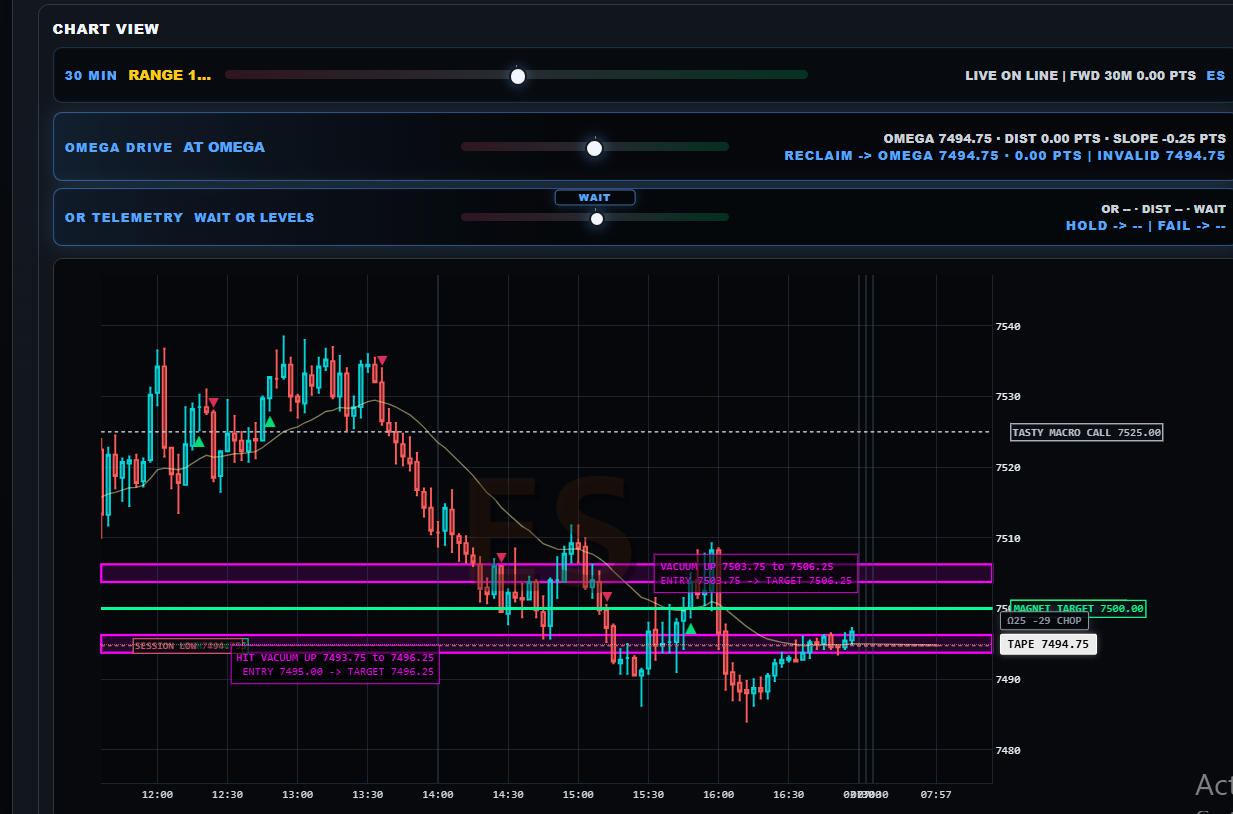
SPX has become closely associated with the growth of 0DTE options trading. Cboe’s current 0DTE resources show how significant same-day options activity has become in the SPX market. But trading SPX 0DTE options requires more than watching an options chain.
A trader may also monitor the S&P 500’s price behavior, futures markets, key levels, liquidity, volatility and changing intraday structure. That raises an interesting question:
Can a futures-focused workspace such as 01DTE provide useful context for someone interested in 0DTE SPX trading?
The answer requires an important distinction.
What Is 0DTE SPX Trading?
0DTE SPX trading refers to trading SPX options on the day they expire.
Cboe explains that 0DTE options are same-day-expiring contracts. It also notes that SPX options are among the major products where 0DTE activity occurs.
Because the options have little time remaining, changes in the underlying index can have a substantial effect on option value.
This creates a fast-moving environment.
Where Does 01DTE Fit?
01DTE is not documented as an SPX options brokerage or SPX options execution platform.
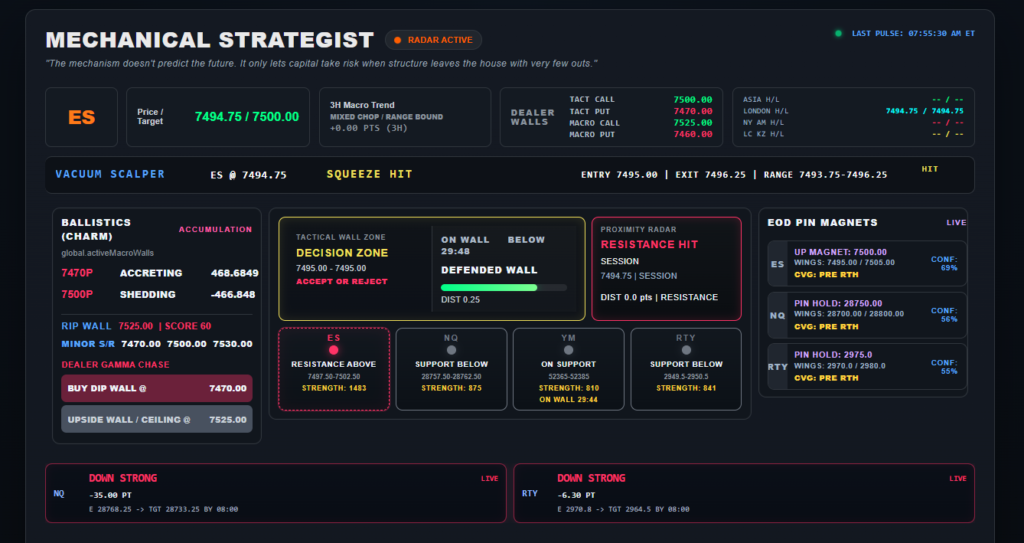
Its current workspace is built around futures markets:
- ES
- NQ
- RTY
- YM
- GC
For an SPX trader, the most obvious connection is ES.
ES futures provide a futures-market view related to the S&P 500, while SPX options are index options.
However, they are not interchangeable products.
A trader should therefore think of 01DTE as a potential contextual futures workspace, not a substitute for an SPX options trading platform.
Why ES Context May Matter to an SPX Trader
An SPX options trader may already monitor ES futures because the futures market provides ongoing price information around the S&P 500.
01DTE includes ES in several of its market-context tools.
That can potentially help a trader investigate questions such as:
- Where is ES trading?
- What mapped levels are nearby?
- How is price responding?
- Is the market holding a range?
- Has the intraday context changed?
Those observations could become part of a broader SPX analysis process. They should not be treated as direct SPX option signals.
0DTE Flow
01DTE’s 0DTE Flow tool currently includes ES alongside NQ, GC, RTY and YM.
The module combines directional context, invalidation information, flow-related context and price structure.
For an SPX-focused trader, the ES view may be the most relevant part of this tool.
The important limitation is that an ES market observation does not automatically determine what an SPX option should do.
Options have their own characteristics, including time decay, implied volatility and strike-specific sensitivity.
Wall-Based Context
01DTE also provides options-backed wall information through tools such as Wall Hunter.
A wall can be viewed as an area worth monitoring.
But traders should avoid turning every options-derived level into an assumed support or resistance line.
The platform’s own documentation emphasizes source evidence, timestamps and current versus prior observations.
That is a healthier way to interpret the data.
Price Response Matters
One of the more useful concepts for both futures and options traders is the difference between:
A level existing
and
price responding to the level.
Price Control is designed around that distinction.
A trader can examine how price interacted with recorded areas instead of relying solely on a static line.
For an SPX 0DTE trader, this can be relevant because the underlying market’s behavior is often central to the options position.
But again, it is context.
It is not a guarantee of the next move.
0DTE SPX Risk
The speed of 0DTE trading makes risk management particularly important.
FINRA warns that 0DTE options can be highly sensitive to underlying price changes and that an option buyer can lose the entire premium paid.
Options sellers can face different risks depending on the position structure.
Therefore, a market-context tool should never be viewed as a replacement for:
- position sizing
- defined risk
- understanding the option structure
- expiration awareness
- liquidity considerations
- broker requirements
Does 01DTE Trade SPX Options?
Based on the current public product documentation reviewed here, the platform is built around futures markets rather than serving as an SPX options brokerage.
That means it should not be marketed as an SPX options execution system.
The more accurate description is:
01DTE can provide futures-market and options-backed context that may be incorporated into an SPX 0DTE trader’s broader analysis.
That distinction improves both accuracy and expectations.
What Would an SPX Trader Actually Use?
A trader focused on SPX might potentially use:
ES Market Context
To monitor the related futures market.
Options-Backed Levels
To identify areas worth watching.
Price Control
To examine observed price response.
Level Comparison
To compare different types of market references.
Range Pulse
To understand whether price remains within an established range.
The trader would still use a separate options platform or broker for actual SPX options execution and contract-specific analysis.
Building an SPX 0DTE Workflow
A typical structure traders use for SPX 0DTE involves: reviewing overnight and pre-market ES futures structure for directional context, checking SPX-specific options positioning (open interest, gamma exposure) through an SPX-focused flow tool, defining a specific invalidation point before entry given the speed of same-day decay, and sizing positions conservatively given the potential for rapid, outsized losses relative to premium collected.
This article is educational and not personalized financial advice. 0DTE SPX trading carries substantial risk and isn’t appropriate for every trader — primary sources like Cboe and the OCC are good starting points for official product specifications and risk disclosures before trading.
Pricing
01DTE currently offers a 15-day free trial and then $149/month unless canceled before the trial ends.
For an SPX trader, the question is therefore whether the additional futures-market context adds enough value to justify another subscription.
If the trader already has a strong ES/futures workflow, the incremental benefit may be smaller.
If the trader wants additional structure and options-backed context around ES, the trial can provide a practical test.
FAQ
What is 0DTE SPX trading? Trading SPX index options that expire the same day they’re traded — a strategy made possible by Cboe’s near-daily SPX expiration schedule.
Is SPX 0DTE riskier than other 0DTE trading? It carries the same core 0DTE risks (fast time decay, accelerating gamma) as other same-day options, with added sensitivity to the aggregate movement of the S&P 500 index.
Does 01DTE support SPX options directly? No — 01DTE is built for futures markets (ES, NQ, RTY, YM, GC), not SPX options specifically. ES futures are closely correlated with SPX but are a separate instrument.
Can ES futures context help with SPX 0DTE trading? Some traders use ES futures structure as a proxy for overnight/pre-market SPX context, since the two track the same underlying index, but this requires manual interpretation rather than being a built-in SPX feature.
Where can I find official information on SPX 0DTE options? Cboe, the exchange that lists SPX options, publishes product specifications and education directly on its site.
Is SPX 0DTE trading suitable for beginners? Generally not recommended as a starting point, given the speed of time decay and gamma risk involved in same-day index options.
Final Takeaway
01DTE should not be described as a dedicated SPX options trading platform.
Its current documented focus is futures.
However, because ES is part of its supported market universe and the workspace incorporates options-backed levels and market-structure observations, it may have a place in a broader 0DTE SPX trading workflow.
The key is understanding what information it supplies—and what it does not.
Enhance your 0DTE SPX trading with institutional futures context. Try 01DTE’s 15-day trial to see if the ES workflow complements your process.